By Eileen Zhuge, @eileenzhuge | Winston Churchill High School, MD
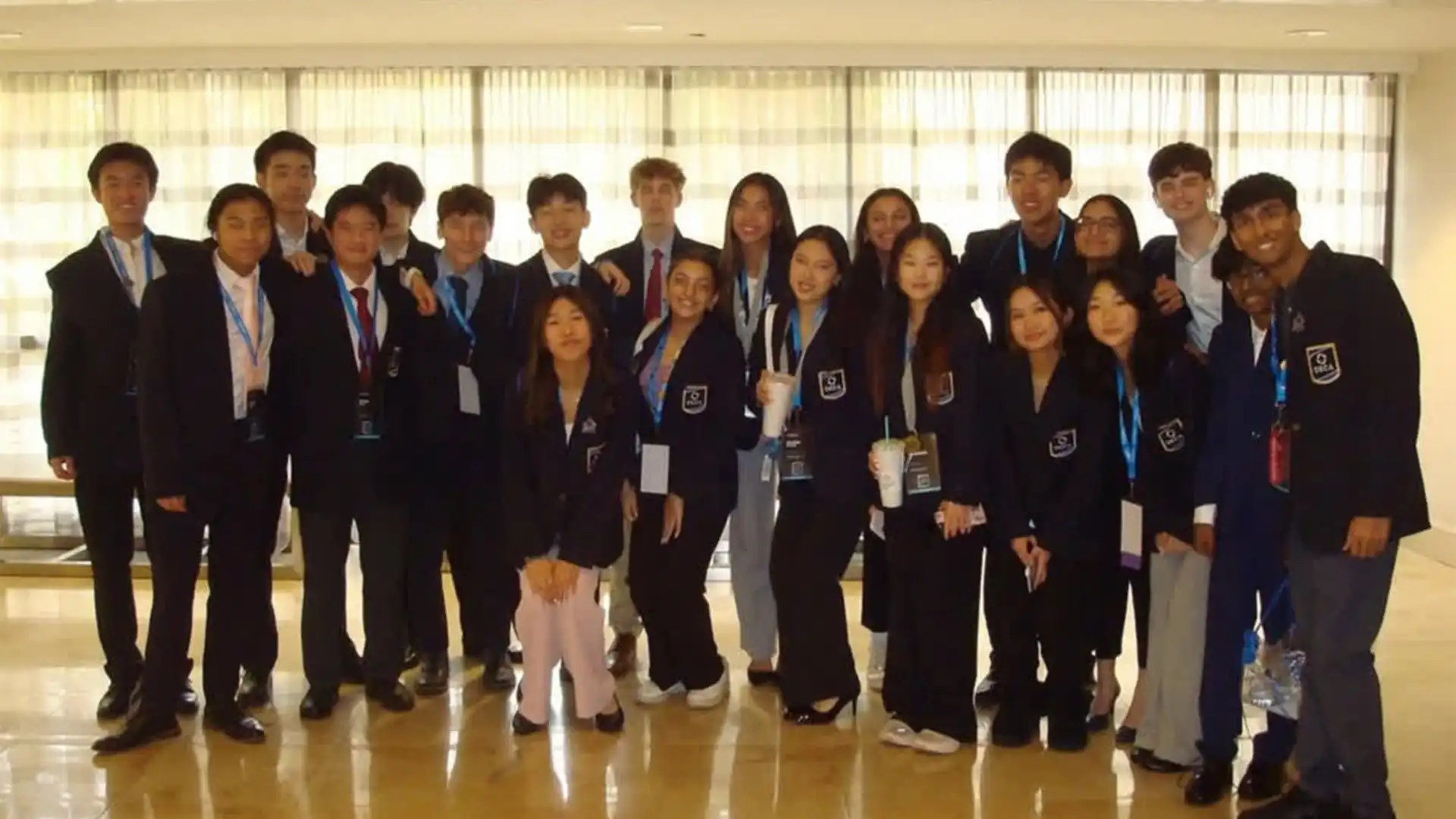
Effective leadership is essential to the success of any DECA chapter. In this article, we spotlight the leadership experiences of the President and Executive Vice President of Winston Churchill DECA, Alina Choudhury and Mason Schiff, as they share insights into guiding their chapter and making decisions.
Alina Choudhury joined DECA during her freshman year after learning about the organization through a classmate before club day. Although she had never heard of DECA before, the welcoming and enthusiastic atmosphere immediately drew her in. Over the next four years, she became deeply involved, competing in role-plays, prepared events and Virtual Business Challenges (VBC). Her growing commitment led her to serve as Vice President during her junior year and later as chapter President.
For Alina, one of the most meaningful aspects of DECA has been the friendships and connections she has built, both across grade levels and with members nationwide. Through these experiences, she also gained confidence in public speaking and leadership in high-pressure settings.
What systems or habits do you use to keep track of DECA initiatives, deadlines and responsibilities throughout the year?
“I created a shared Google Calendar with our 18-person officer team where we schedule training events, fundraisers and general club meetings. This ensures that everyone knows about what’s upcoming. I also created a Google Document outlining everyone’s responsibilities, which was distributed to all officers last June when they first took on their roles. I regularly communicate with our advisor, Ms. Showen, to stay up to date on all information coming from Maryland DECA and to keep her informed about what’s happening within our chapter.”
How do you make sure quieter members of the executive team feel comfortable contributing ideas during DECA planning or discussions?
"During executive team meetings, I like to go around in a circle and share my ideas last to ensure everyone else, especially the quieter members, can share their ideas. This helps prevent my opinion from influencing others too early. Outside of meetings, I try to check in privately with officers. These one-on-one conversations allow them to share ideas or concerns they might not otherwise voice, and I do my best to bring those perspectives into group discussions when appropriate."
Can you share an example of how you handled differing opinions within the leadership team while planning a DECA event or initiative?
“A few months ago, two officers disagreed over what we should sell for our Thanksgiving fundraising event. One officer wanted to sell cookies, while the other wanted to sell candy. One officer was speaking over the other, making them frustrated. I intervened to make sure that each officer was being listened to and had the opportunity to present their idea fully. When faced with differing opinions like this, my focus is to ensure no one is being interrupted.”
What is one leadership skill DECA has helped you develop that you didn’t expect going into your role as president?
“DECA has helped me become more adaptable. Before my role as President, I was very Type A and would get frustrated when things didn’t go as planned. For example, last year, our chapter was unexpectedly unable to attend Regionals, and we had to host our own school-wide event instead. At first, the perfectionist in me felt overwhelmed and unsure of how to proceed. However, this experience taught me that a key part of leadership is expecting the unexpected and being able to adapt quickly.”
Mason Schiff is the Executive Vice President of our DECA chapter and has been an active member of the organization for four years. Over his time in DECA, he has competed in all event types: role-plays, prepared events and Virtual Business Challenges. After qualifying for ICDC through different events in successive years, Mason stepped into the role of Head of Training during his junior year, where he helped strengthen his chapter’s competitive preparation.
He describes himself as a “flexible worker,” able to adapt to different competition styles and support members with various strengths. One of his most meaningful experiences in DECA was attending ICDC for the first time, which solidified his passion for leadership.
During competition season, how do you coordinate communication between officers, advisors and members?
“During competition season, I focus on keeping communication clear for everyone involved. I coordinate information through a synchronized Google Calendar and GroupMe, so officers and members can easily track deadlines and important updates. In addition, I provide weekly summaries outlining expectations, upcoming deadlines and priorities. This structure helps ensure everyone stays on the same page without feeling overwhelmed.”
How do you support collaboration among officers with different working styles or schedules?
“I support collaboration by encouraging flexibility and creativity in how officers approach their work. When assigning tasks such as training materials or social media content, I provide general guidelines rather than strict instructions. This allows each officer’s individual style and strengths to come through. I also emphasize open communication, making it clear that officers are always welcome to ask questions or discuss ideas if they need additional support.”
During high-pressure moments, how do you help maintain team morale and focus?
“During high-pressure situations like conferences or competitions, I try to keep the team grounded and confident. I remind members to trust the skills they’ve developed through training. By reinforcing the idea that they are capable and prepared, I help shift the focus away from stress, allowing the team to stay calm and supportive of one another.”
What part of your DECA experience has most strengthened your management or organizational skills?
“Managing the training team has had the greatest impact on strengthening my organizational skills. In this role, I’ve had to lead through clear communication and adaptability, while also actively participating in training sessions and supporting individual members. Balancing leadership with hands-on involvement has helped me grow as a more effective and organized leader.”